
Licence L1
This module introduces first-year architecture students to the basics of statistics applied to surveys. Students learn how to design and structure questionnaires, select appropriate question types, collect data, and define a relevant sample. The course also covers basic analysis tools (tables, charts, percentages) used to interpret survey results. Through case studies on space usage and user behavior, students understand how statistical data supports and enhances architectural decision-making.
The course traces the history of cities from the prehistoric period to the present day. It explores the evolution of urban planning across different civilizations, highlighting the factors that shaped cities, their spatial organization, and the distinctive characteristics of each urban culture and historical period.
Le cours retrace l’histoire des villes depuis la période préhistorique jusqu’à nos jours. Il présente l’évolution de l’urbanisme à travers les différentes civilisations, en mettant en évidence les facteurs de formation, les modes d’organisation et les caractéristiques propres à chaque époque et culture urbain.
- معلم: MERZELKAD RYM
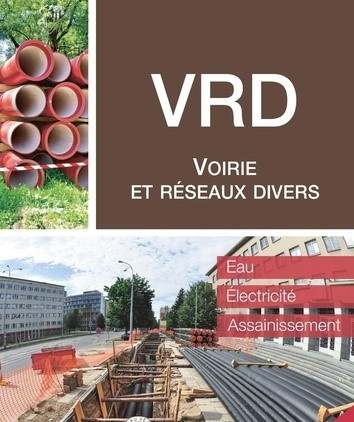
This course, intended for first-year undergraduate students in Urban Planning, is composed of two main parts: Roads and Various Networks (VRD). It includes six chapters distributed over the third semester (S2), in accordance with the curriculum framework provided by Saad Dahlab University, Blida 1.
In this course, the focus is on technical knowledge related to urban engineering (VRD), which is essential for training urban planners in the formalization and interpretation of development plans.
- معلم: Oumer Ouassila