
S2

Course description, according to the outline.
.....................................................................................................
Introduction to Artificial Intelligence.
This course aims to introduce the concepts of AI into university education. It covers definitions, the characteristics of the main AI tools, the challenges and issues related to AI, and its future potential.
..........................................................................................................
مقدمة في الذكاء الاصطناعي.
تهدف هذه الدورة إلى تقديم مفاهيم الذكاء الاصطناعي في التعليم الجامعي. وتغطي تعريفات الذكاء الاصطناعي، وخصائص أدواته الرئيسية، والتحديات والمشكلات المتعلقة به، وإمكاناته المستقبلية.
introduction à l'intelligen,ce artificielle .
Ce cours vise à introduire les concepts de l'IA dans l'enseignement universitaire. les definitions, les caaracteristiques des principaus outils IA. les defis, les enjeux liés à l'IA et les promesses de l'avenir
.......................................................................................................................
Information about the license for the animated image (gif), from the homepage of this course.
https://www.flaticon.com/free-animated-icon/coding_10971760

- Teacher: Abdelli Mohamed
I) Presentatation of the module
Analysis 2 is the module of Analyse of the second semester which contains three important courses: Taylor expansions, primitives and integrals and differential equations.
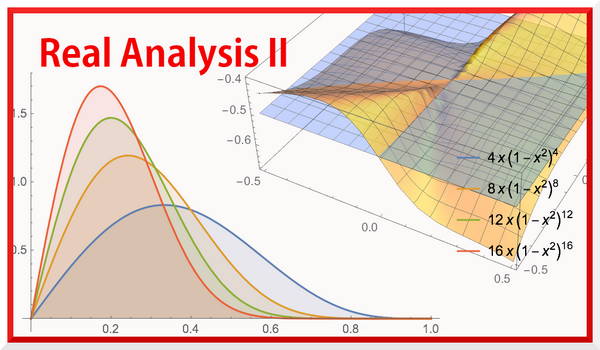
II) This module is intended to the first class LMD mathematics students
Chapter 1: Taylor or finite expansions
Chapter 2: Primitives and integrals
Chapter 3: Differential equations.
III) Objectives
The main objective of the module of Analysis 2 is:
1. To enable students to further develop essential analytical skills,
2. To acquire rigorous reasoning in problem analysis.
3. To select an appropriate analytical tools for problem solving, and mastery of techniques in integral calculus.
- Teacher: Mimouni Malika
This course covers the basics of electrostatics and electrokinetics, providing a springboard for a fuller understanding of the concepts of magnetism and electromagnetism due to charges moving at variable speeds.
- Teacher: arbouz hayat
This course is intended for first-year students majoring in Mathematics (MI). It covers the educational program of the module "Introduction to Probability and Descriptive Statistics." It can be helpful for anyone wishing to learn fundamental concepts and techniques in this field.
The course is organized into two chapters covering different aspects of descriptive statistics:
1.1 Basic concepts and definitions used in the field of descriptive statistics;
2 Basic tools of descriptive statistics (statistical tables and graphical representations);
2. Measures of central tendency and measures of dispersion.
The third chapter is based on combinatorial analysis and an introduction to probability calculations.
- Teacher: Benamara Nadia
ddgd
- Teacher: djaout abdellah
Notions of
electrostatics,
conductors in equilibrium
electrokinetics
magnetism
- Teacher: arbouz hayat
- Teacher: FS S2 Transversale